Blog Post: Week 16 – World Making as Resistance

As I am sure you are aware by now, I tend to agree with Jameson’s assertion that “it has become easier to imagine the end of the world than the end of capitalism.” As someone who struggles with depression and anxiety, I find it difficult to hold on to hope even in the best of …

Blog Post: Week 15 – Class Generated Content

In terms of how I felt my presentation went, I’m not entirely sure. People seemed to find it interesting, and Lane didn’t say anything negative, so I have to assume it went well. At the same time, however, I felt less prepared going into the presentation than I would have liked due to this semester …

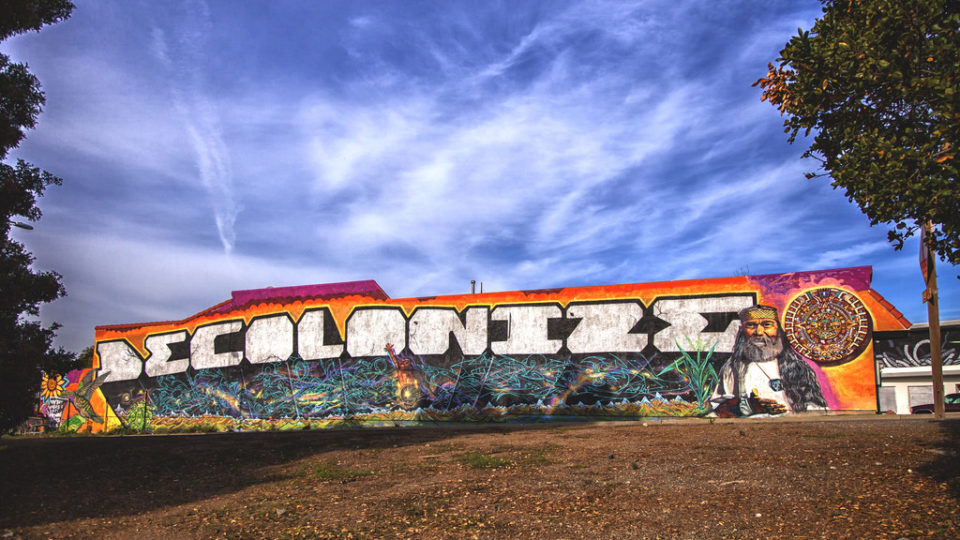
Blog Post: Week 12 – Occupy and Decolonize

I initially found this week’s response quite difficult, because I couldn’t really think of examples of how we empower ourselves “within massive abstract systems that depersonalize and alienate.” Beyond just navigating a major metropolitan city like Chicago or Singapore, or even a smaller city such as Copenhagen, I couldn’t think of any examples from my …

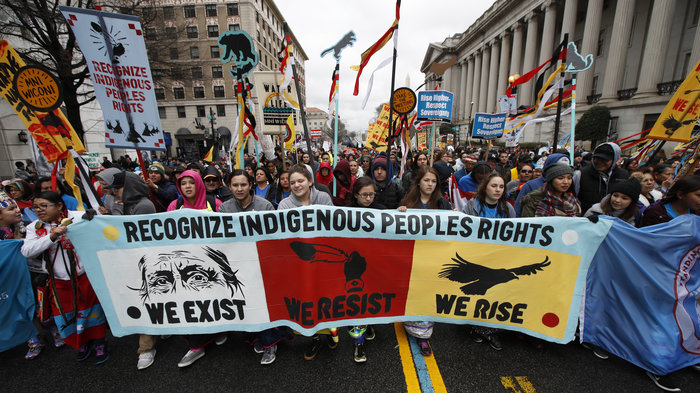
Blog Post: Week 11 – Indigenous Resistance

I must admit that I am not terribly familiar with many indigenous resistance movements (for instance, I had not heard about the occupation of Alcatraz prior to taking this course). However, I did follow the Standing Rock protest somewhat on social media. I think the “on the ground” stories did a much better job of …

Blog Post: Week 10 – The Bullet or the Ballot

This week’s topic particularly resonates with me, as I have long wrestled with the question of violent vs. nonviolent protest (even as I understand that this is, as Lane notes in his prompt for this week, a somewhat false binary). While I have dealt with anger issues for most of my adult life, I am …

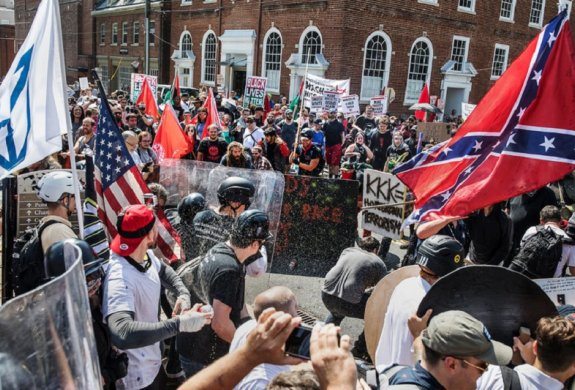
Blog Post: Week 8 – Bodies in Civic and Public Spaces

When reflecting on the questions posed in this week’s blog prompt, I immediately thought about the difference in consequences between something like the Ferguson protests (or even the 1992 riots over the Rodney King verdict) and the riots that routinely follow sports victories. Often, these consequences involve a racial component, with white people suffering fewer …

Blog Post: Week 6 – Media, Games, and Spaces

When discussing media interventions such as those described by Rita Raley in Tactical Media, I think it is important to consider things like the distribution of power, the consolidation of media outlets, and the rise of ideological tribalism in the 21st century. I believe that these three conditions greatly impact the efficacy of media interventions …

Blog Post: Week 5 – Disrupt the Spectacle

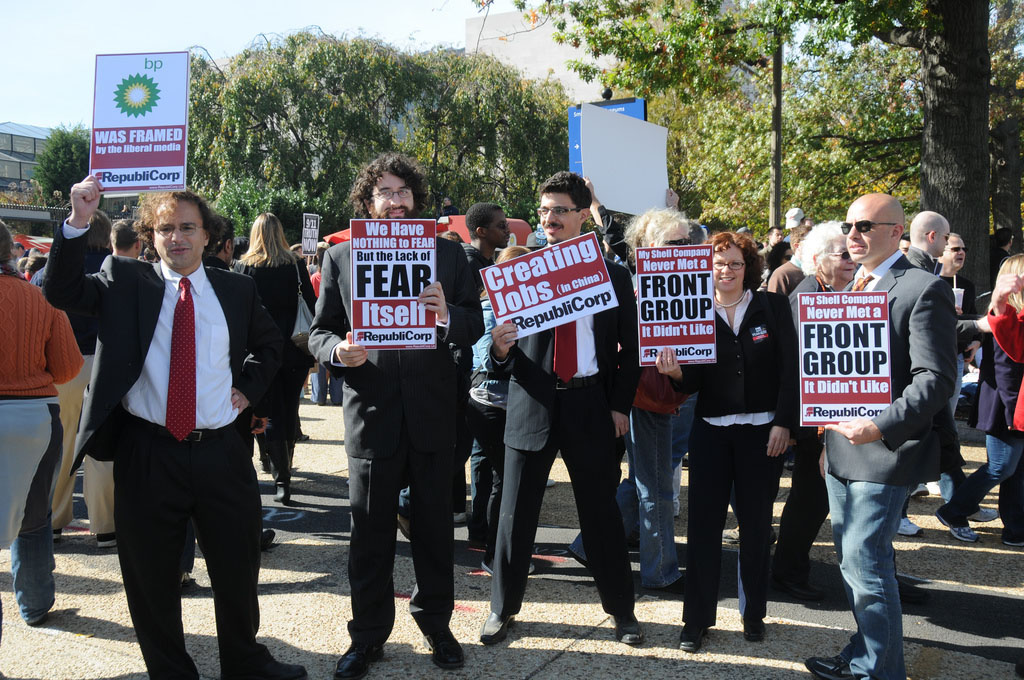
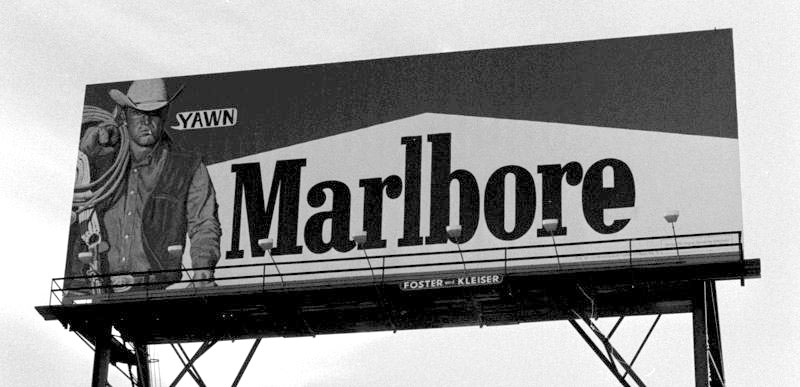
While reading both Wark and Raley, I found myself thinking quite a bit about the Billboard Liberation Front (BLF), which is one of the first acts of détournement I can recall encountering. I’m sure I’m not the first to point this out, but the BLF seem to epitomize the core aspect of détournement, which Douglas …

Blog Post: Week 4 – Situationist International

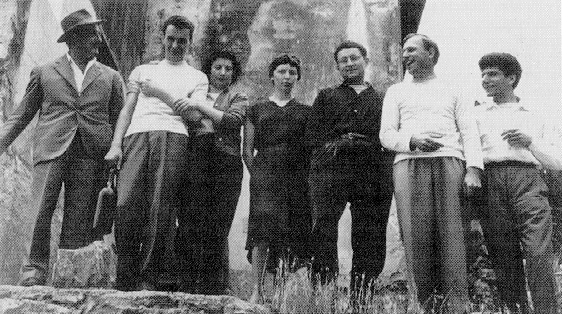
Based on McKenzie Wark’s The Beach Beneath the Street, it appears as though the legacy of the Situationist movement has permeated various aspects of mainstream society and popular culture. For instance, Wark explains that the ideas of dérive and détournement either influenced or can be seen in everything from urban planning (specifically through architecture that …

Blog Post: Week 3 – Legislative action

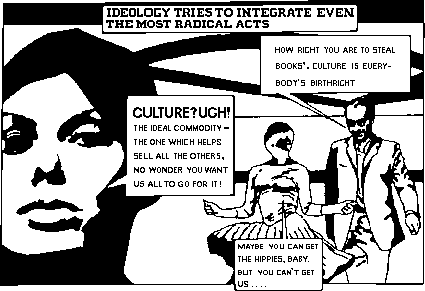
After reading chapters 1 – 7 in McKenzie Wark’s The Beach Beneath the Street, I think I find the concept of détournement most interesting. Wark describes this idea as both “the opposite of quotation” and “a challenge to private property” because it “attacks a kind of fetishism, where the products of collective human labor in …

Design a site like this with WordPress.com
Get started